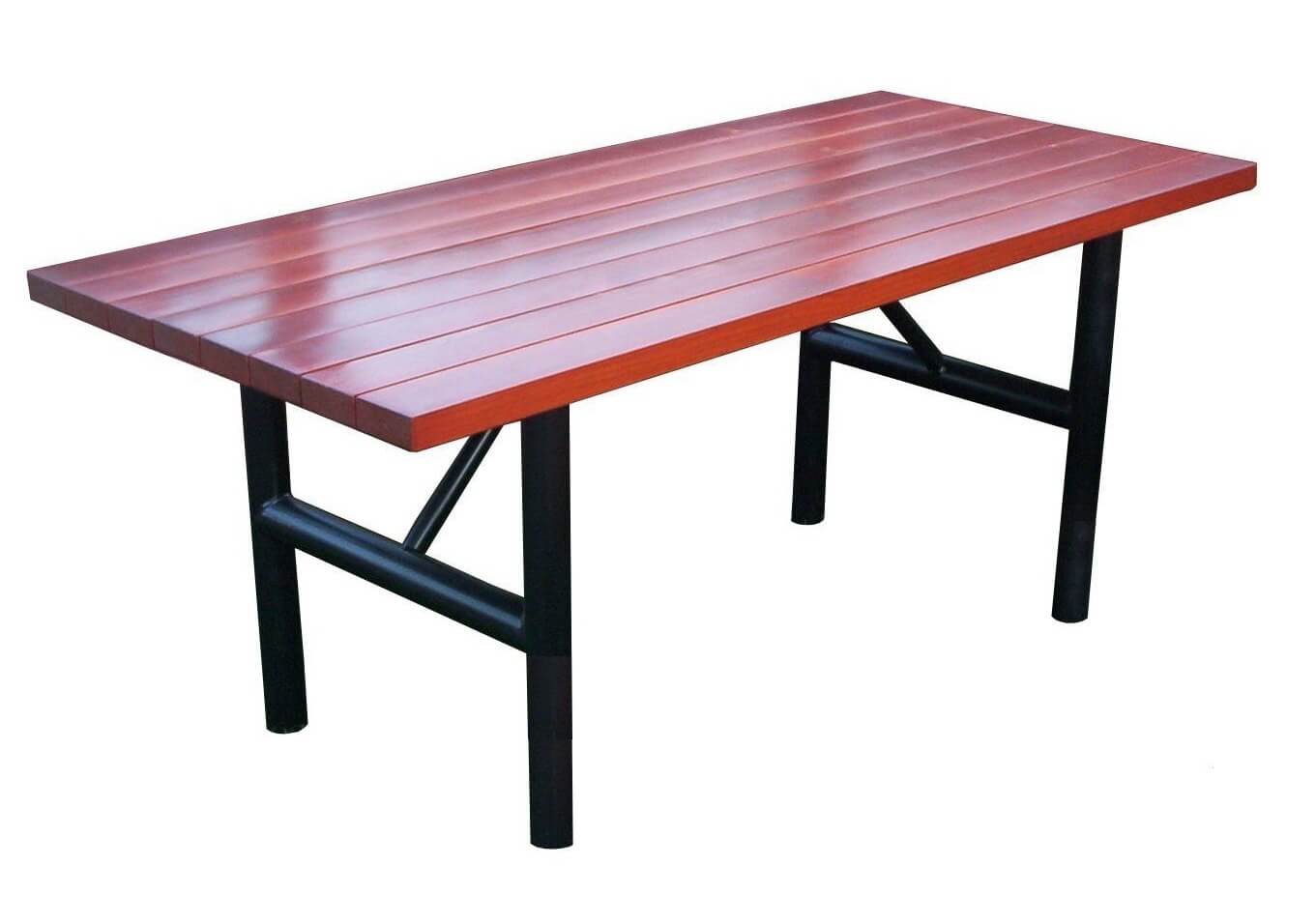
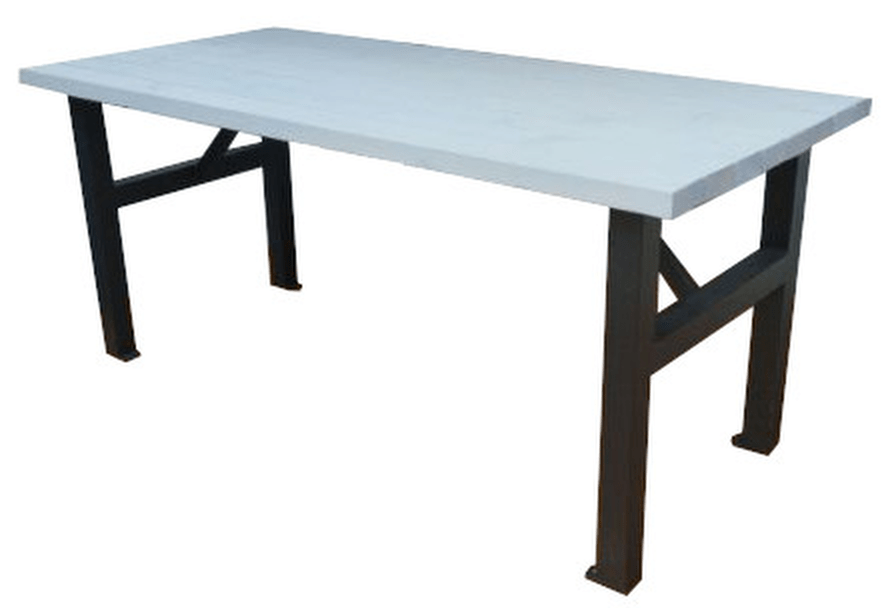
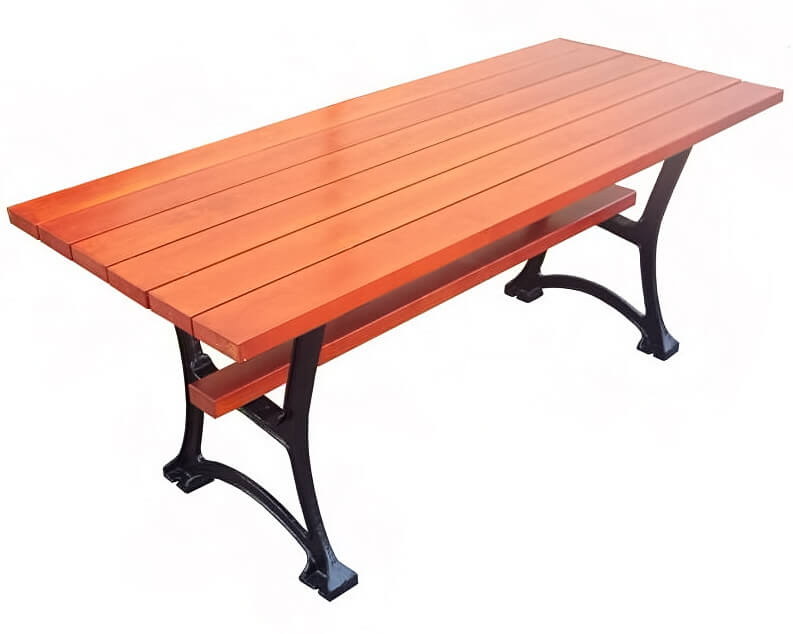
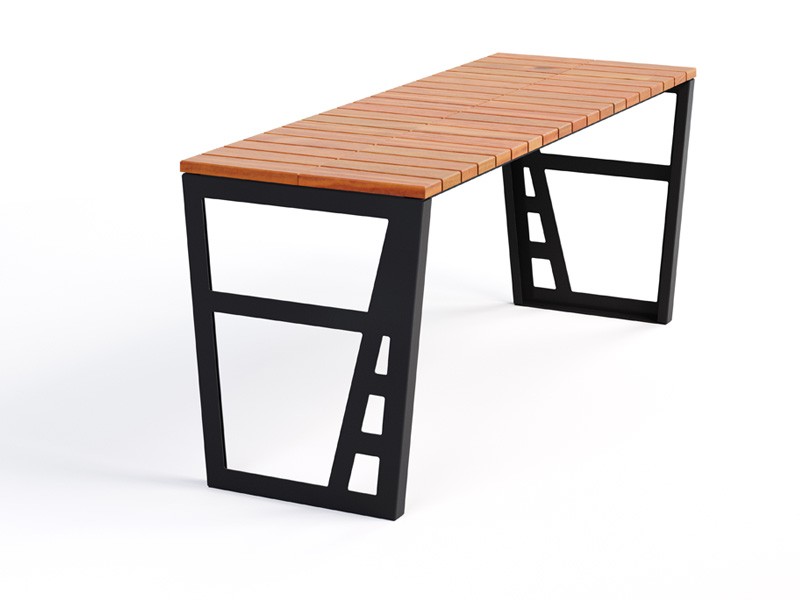
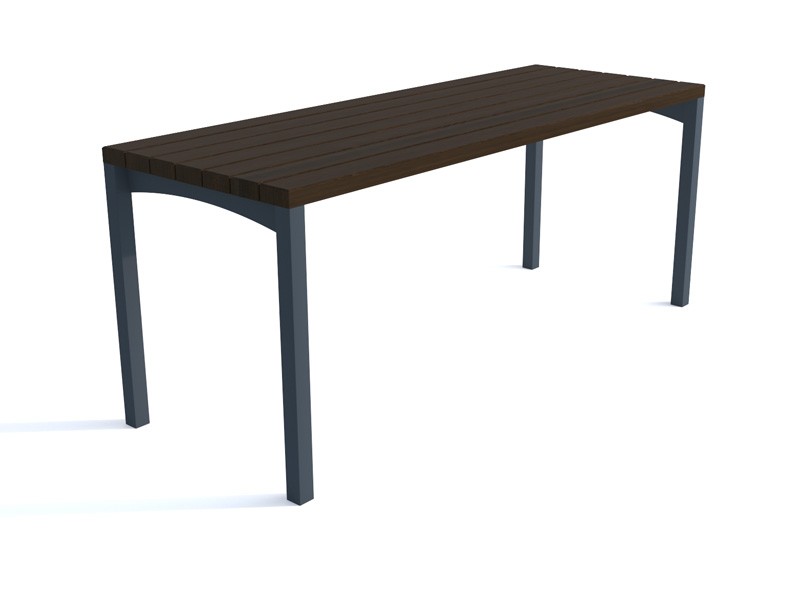
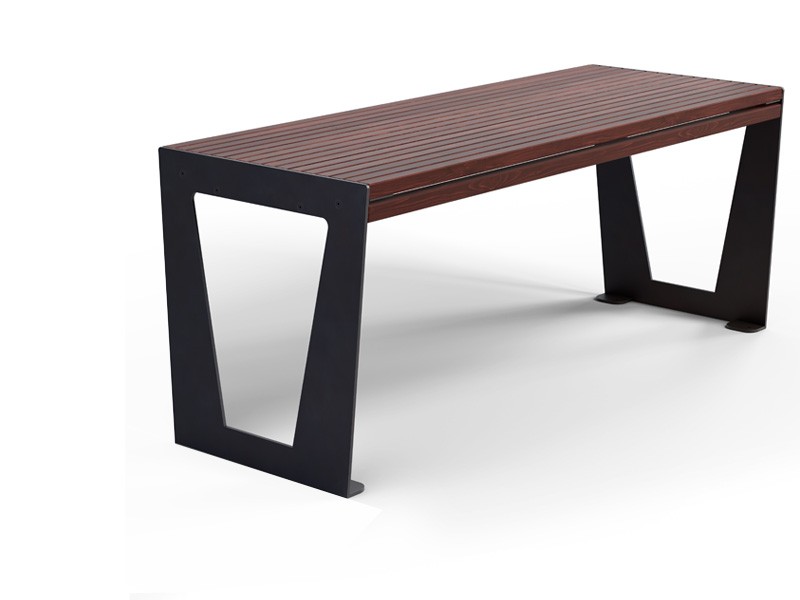
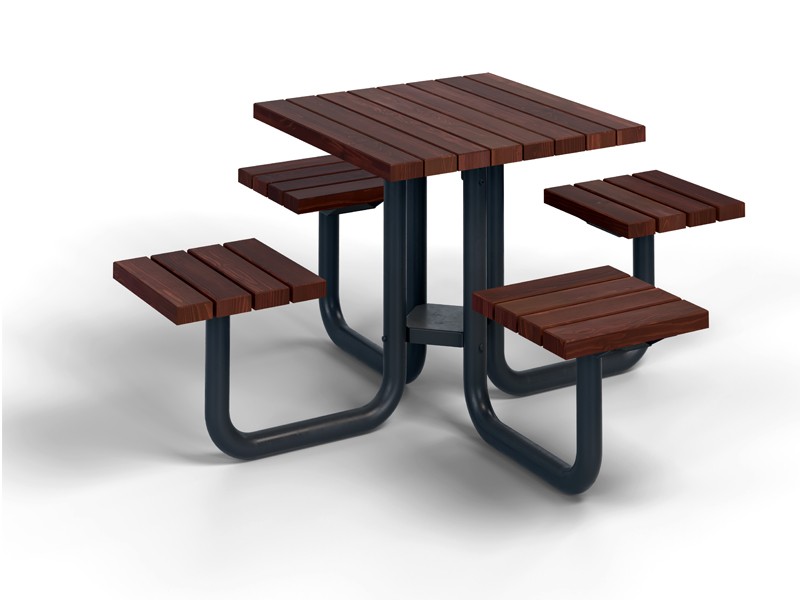
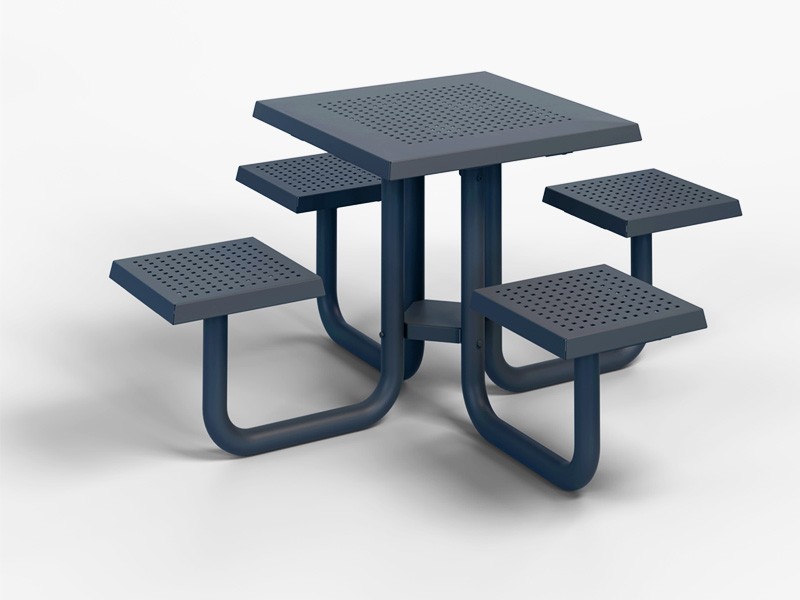
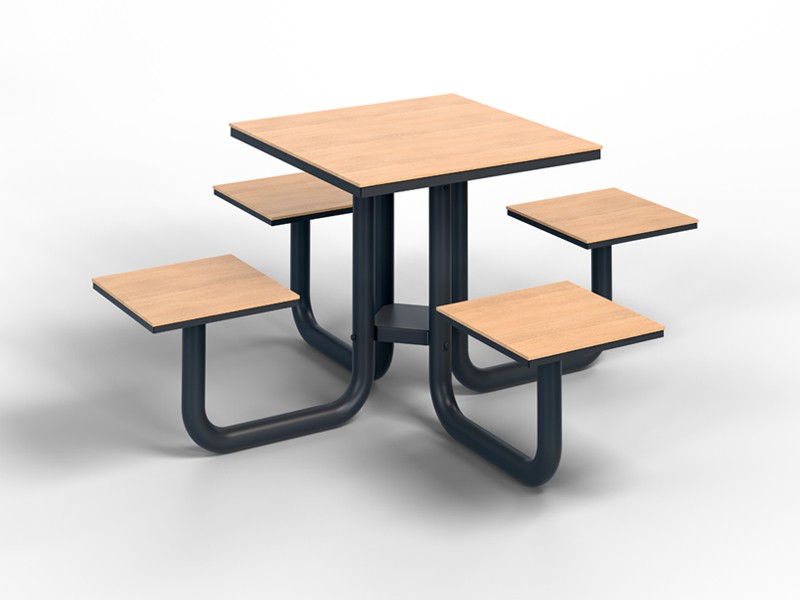
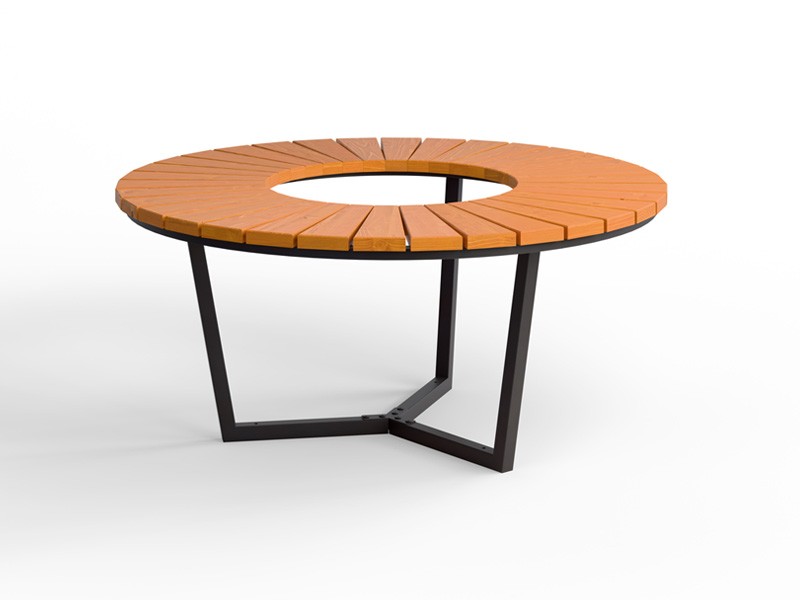
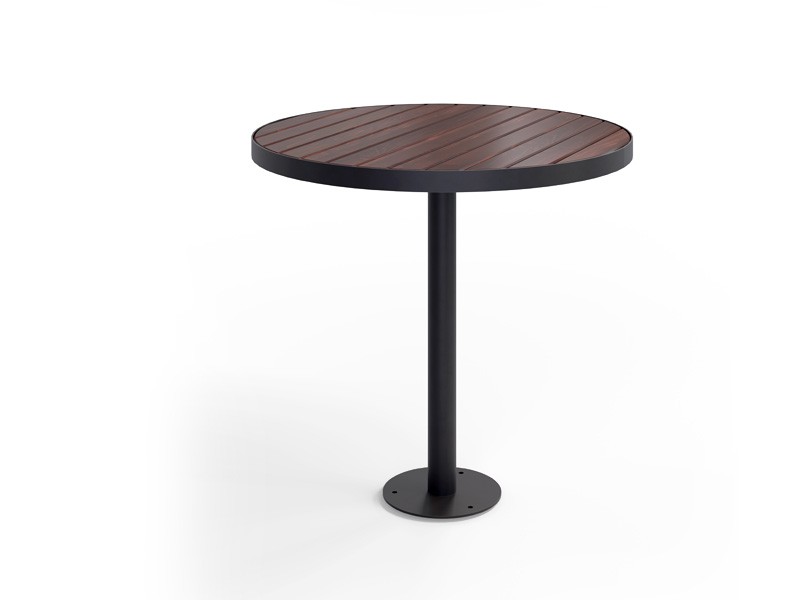
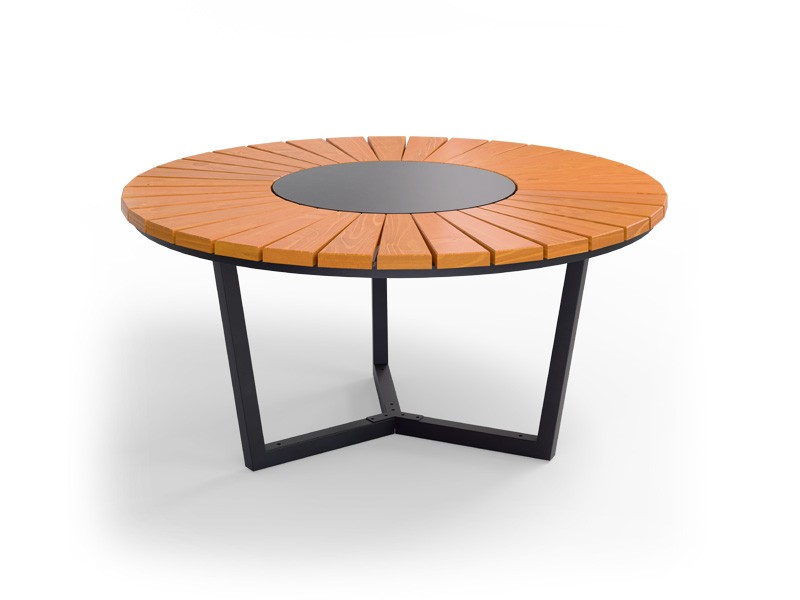
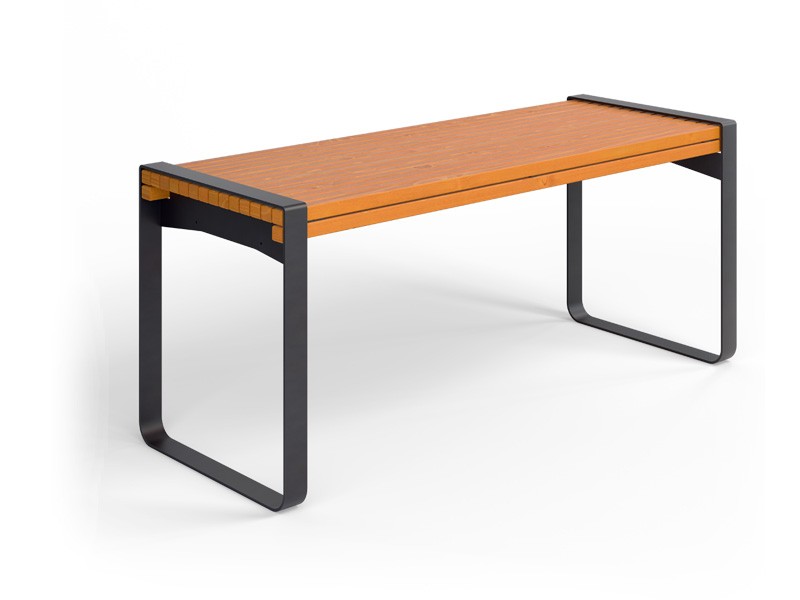
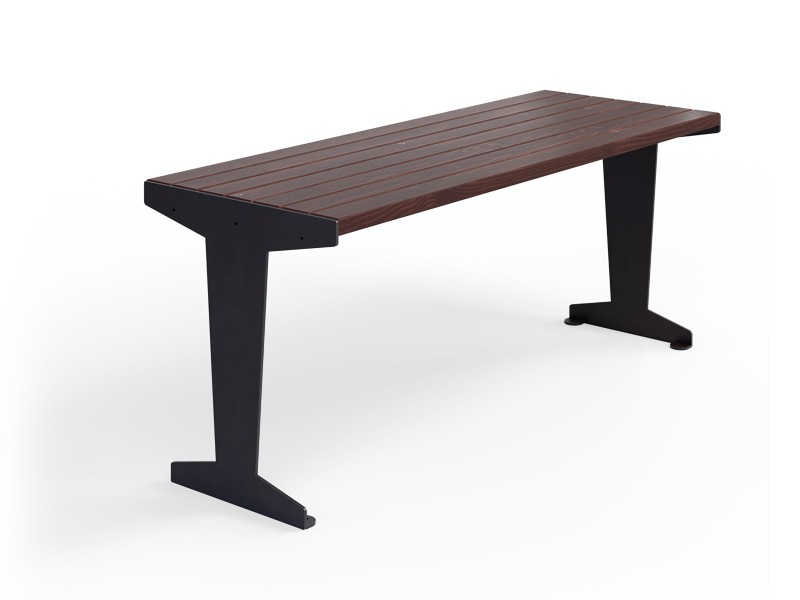
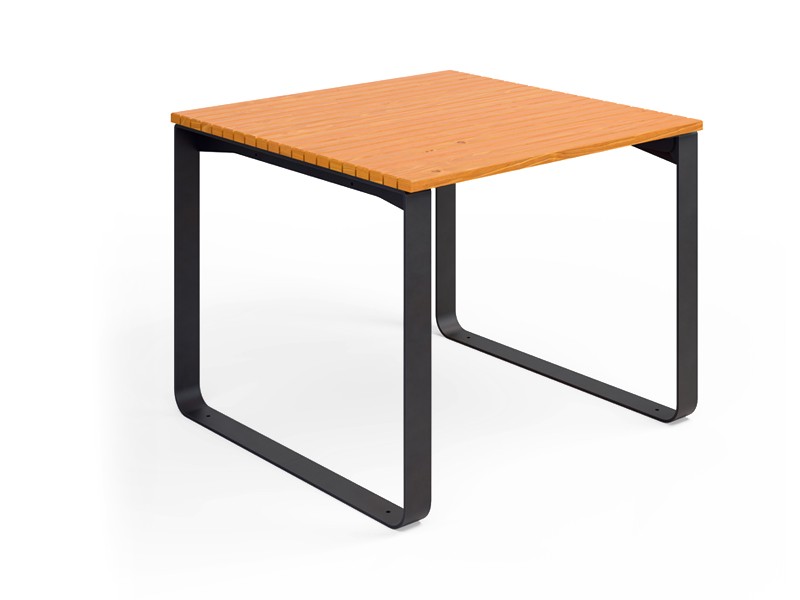
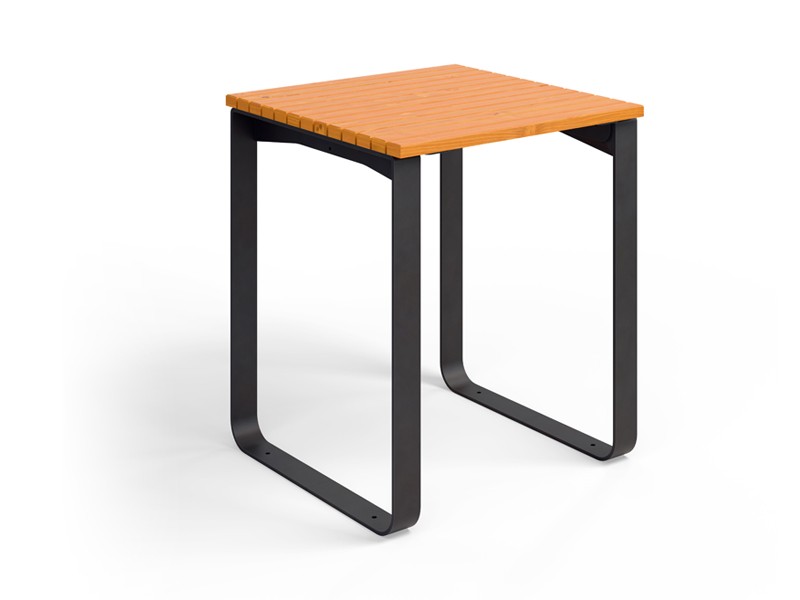
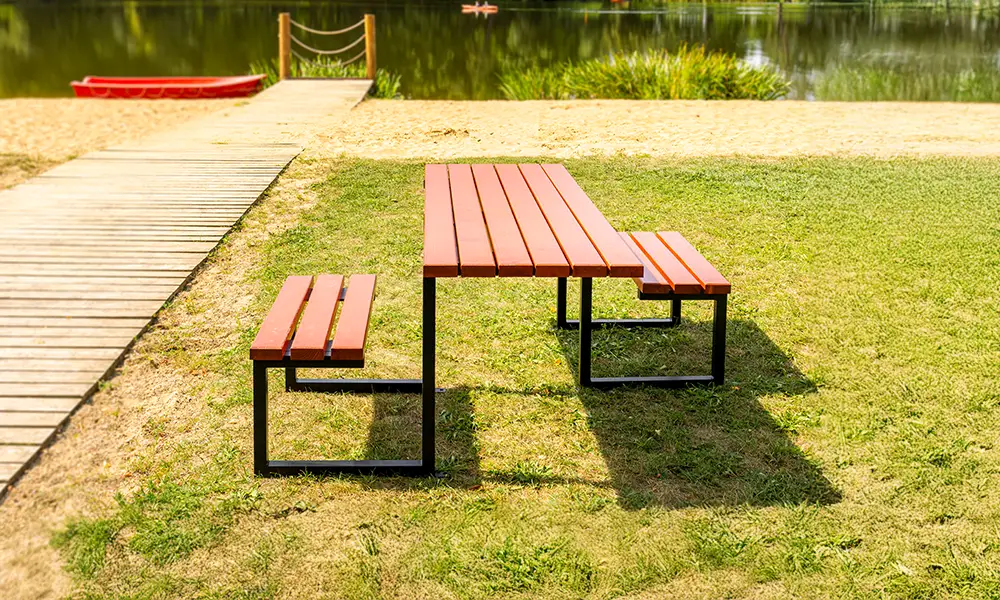
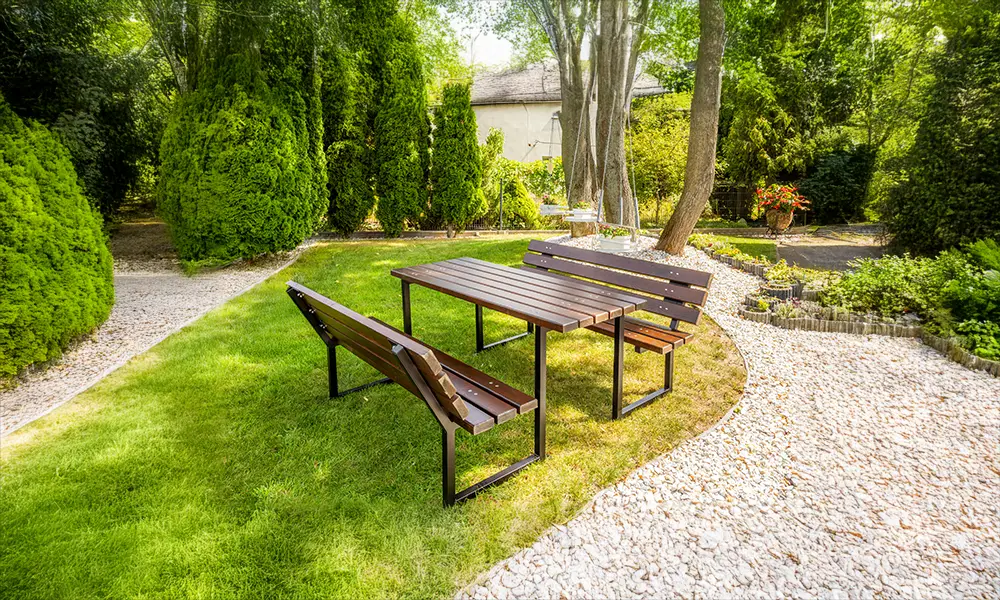
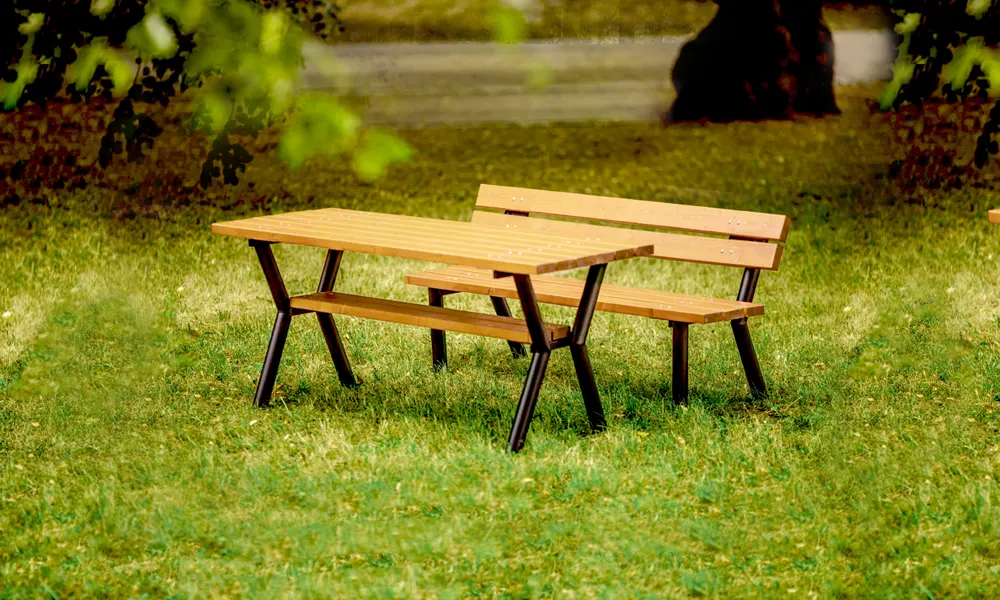
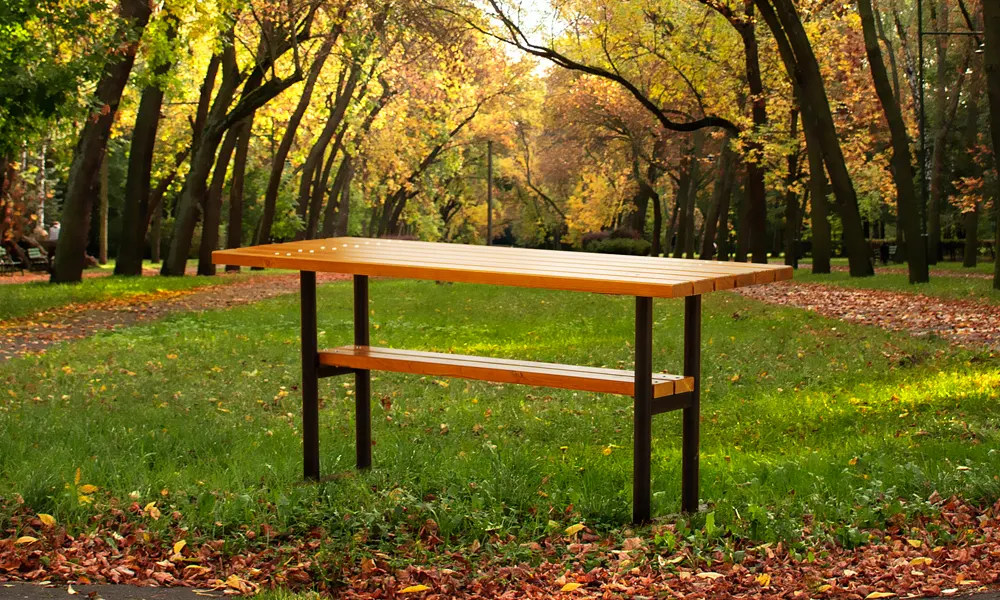
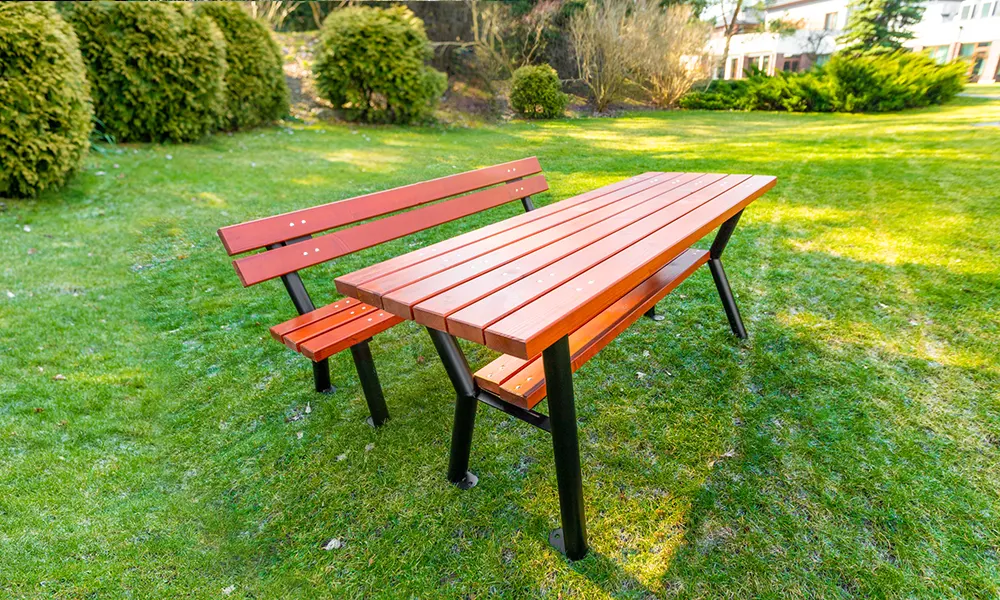
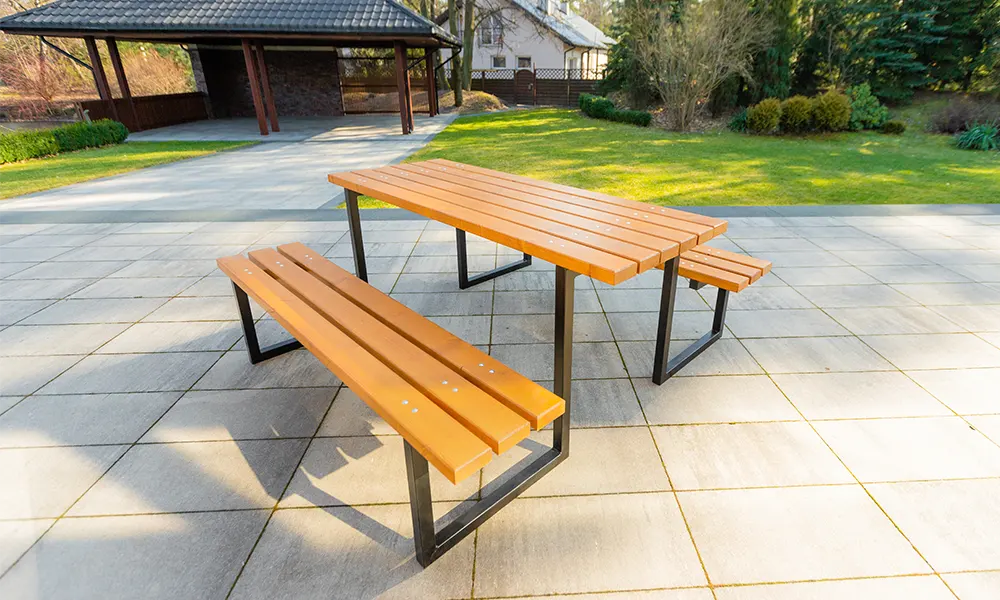
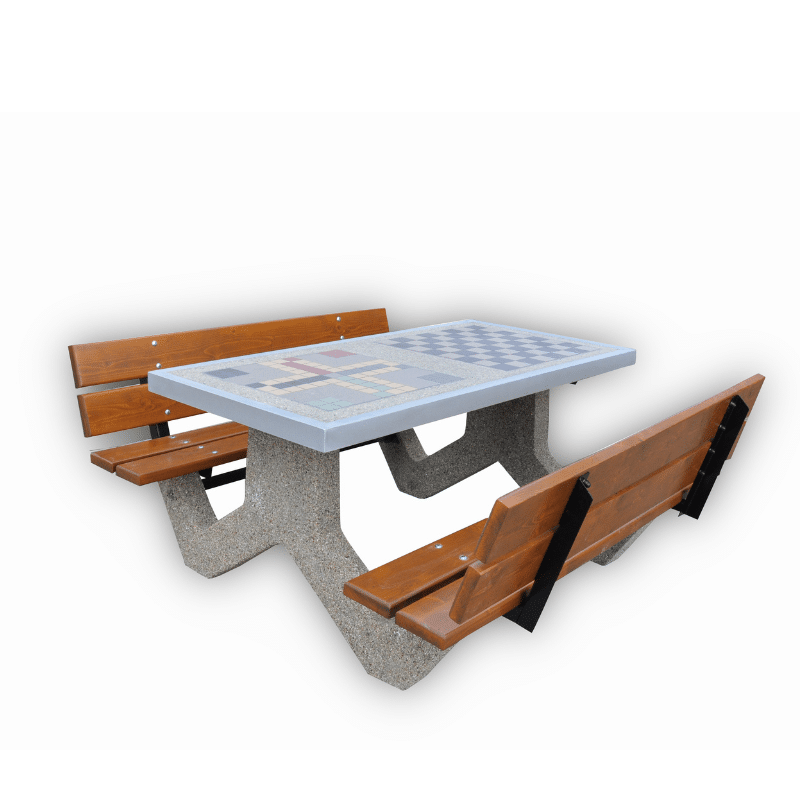
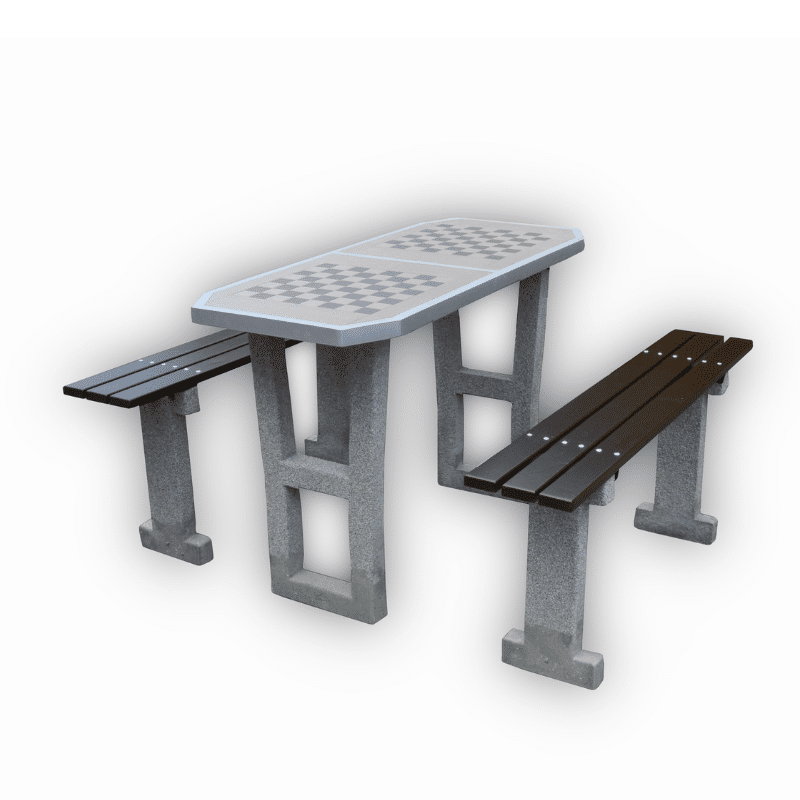
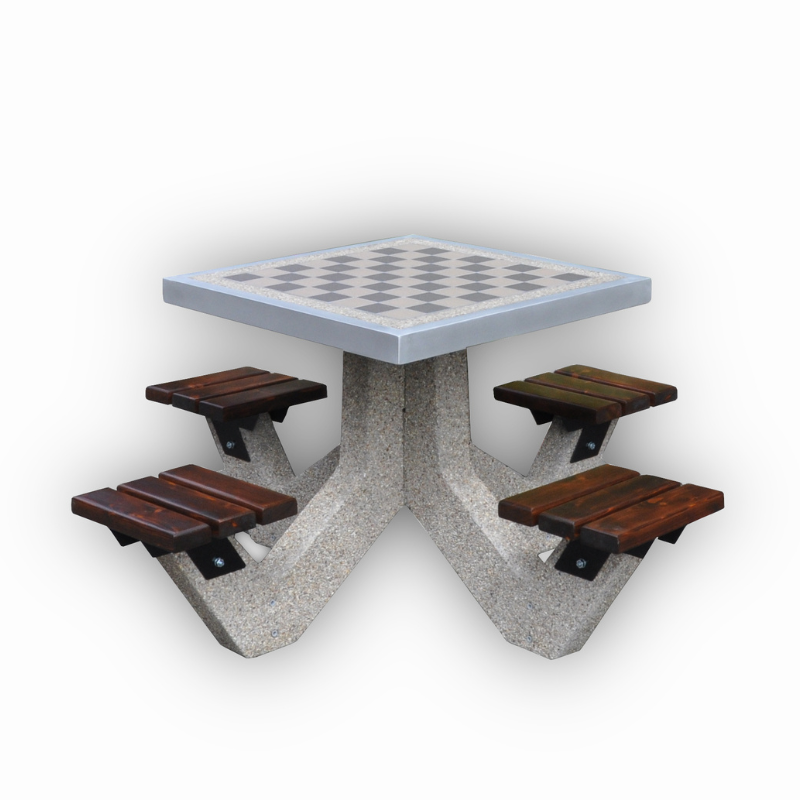
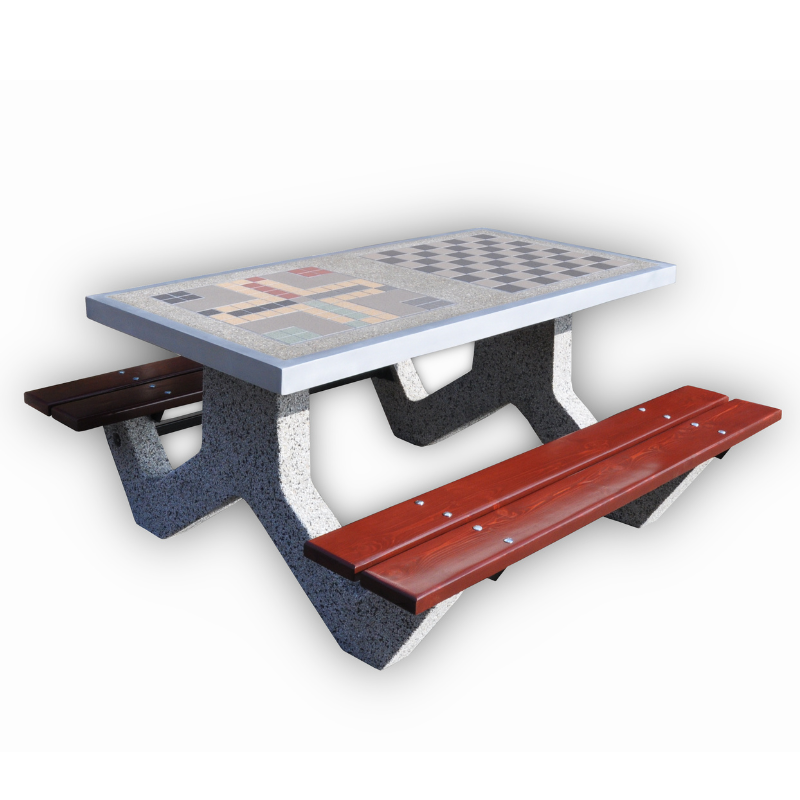
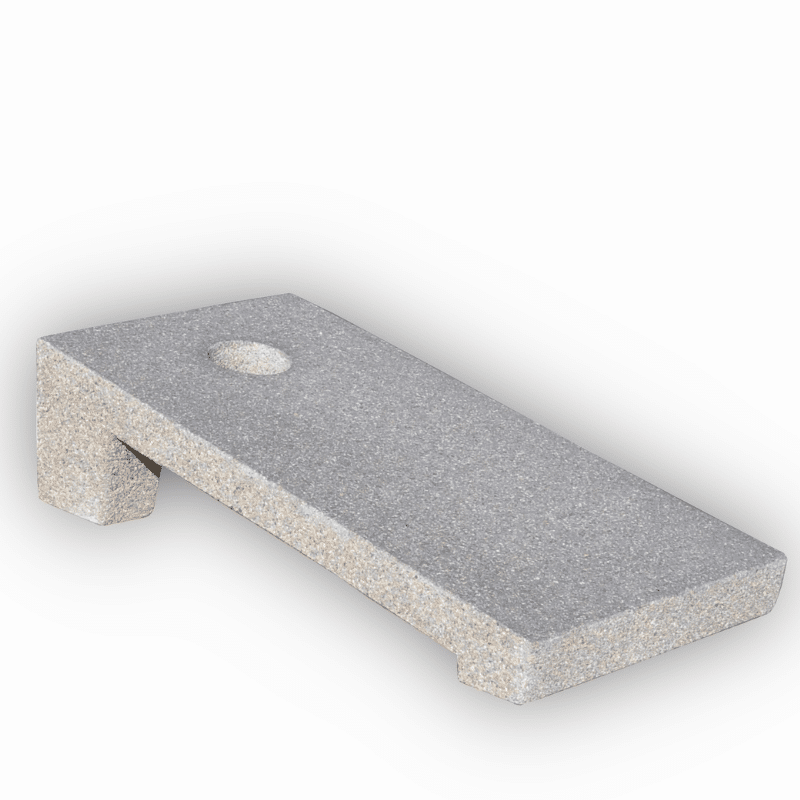
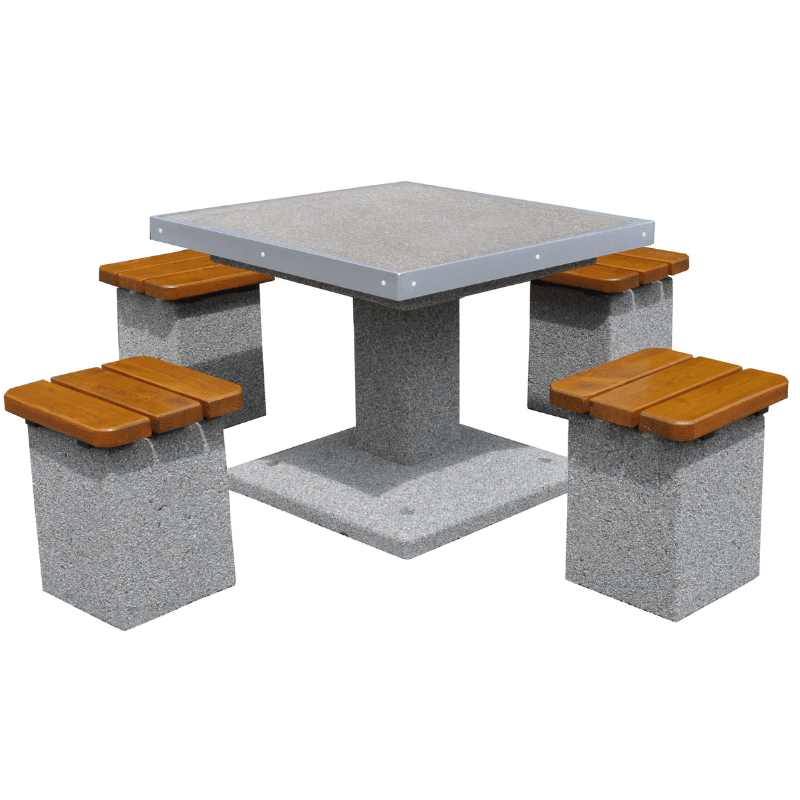
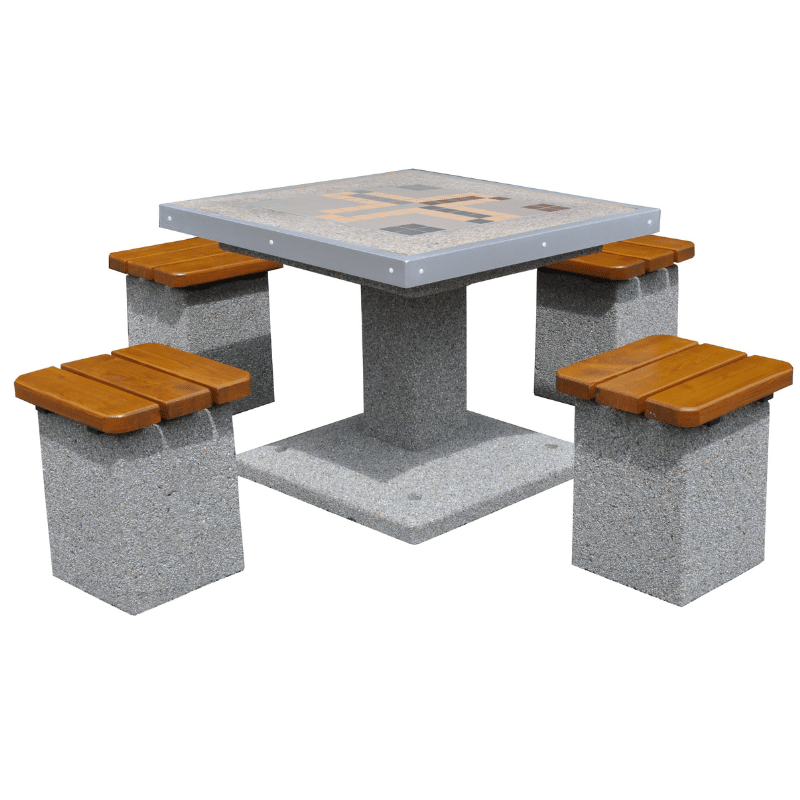
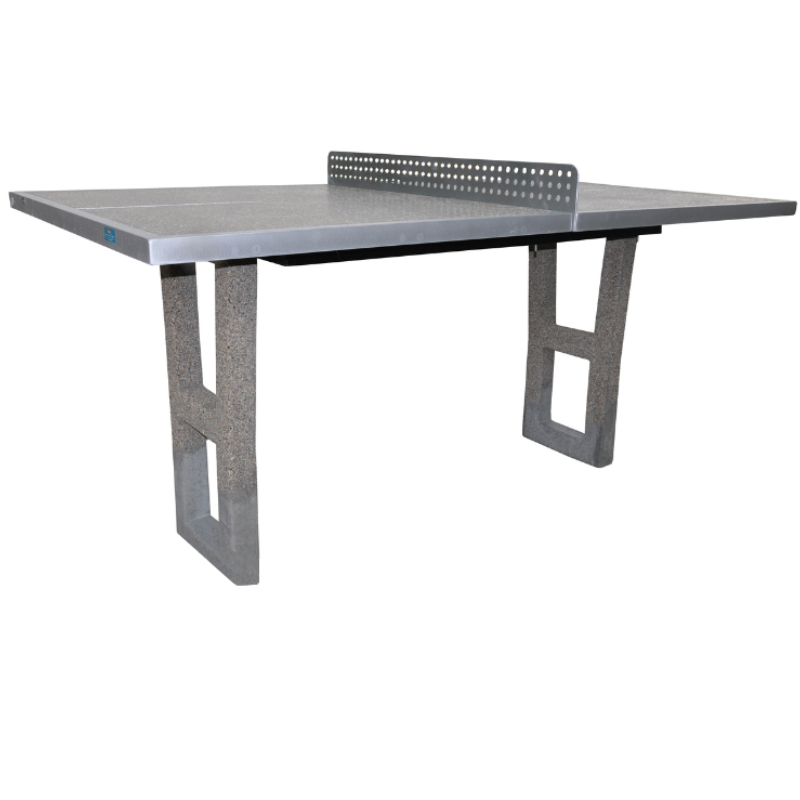
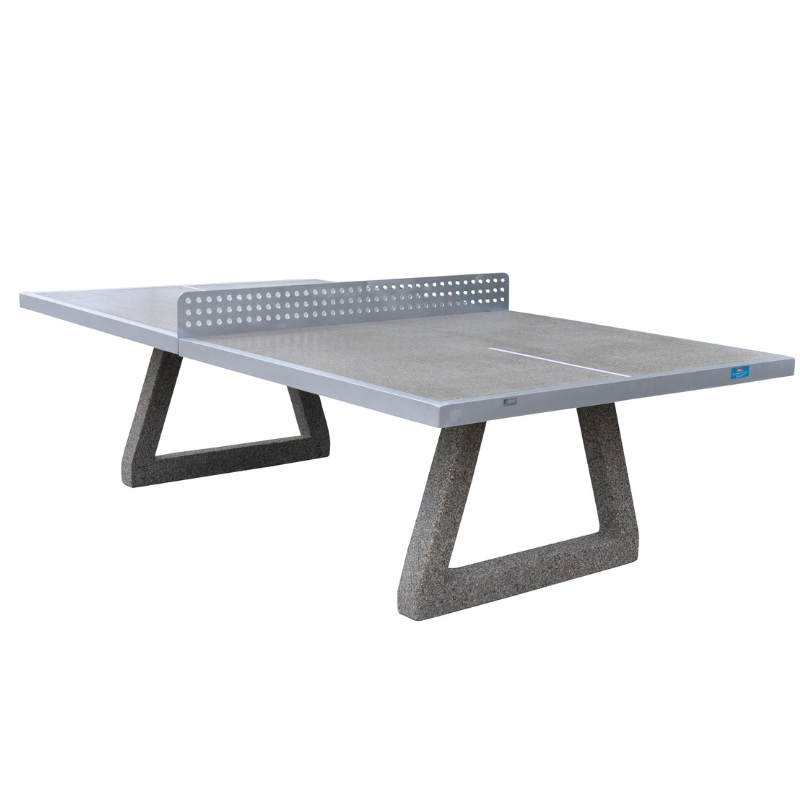
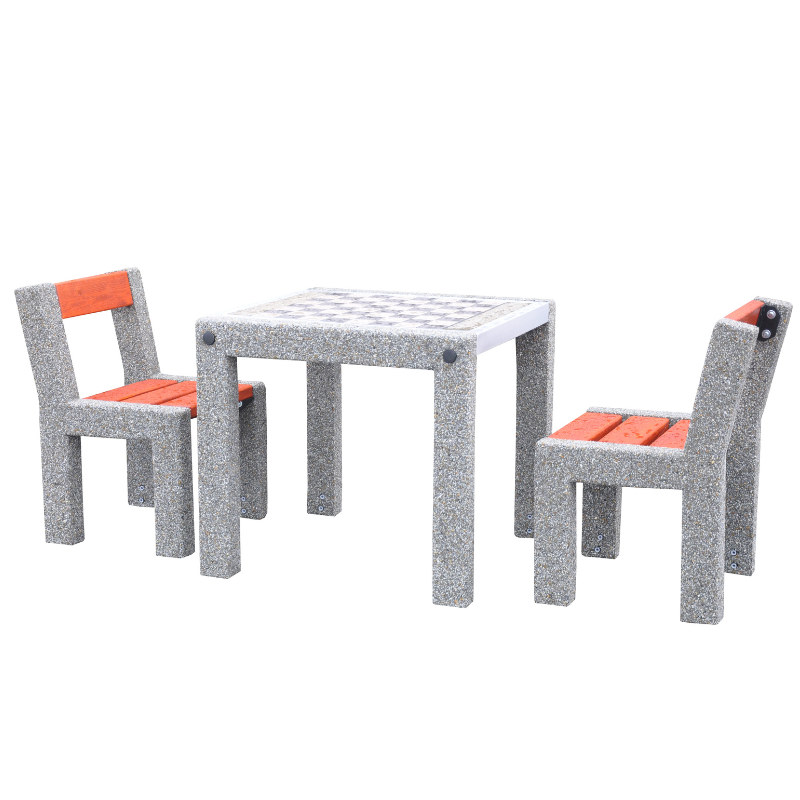
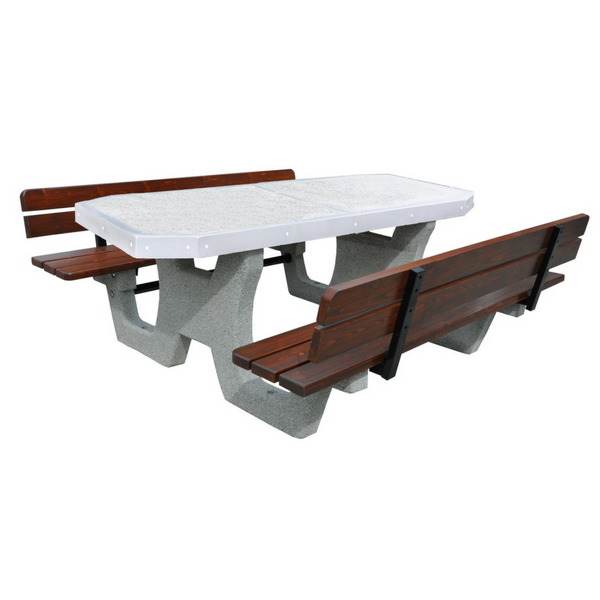
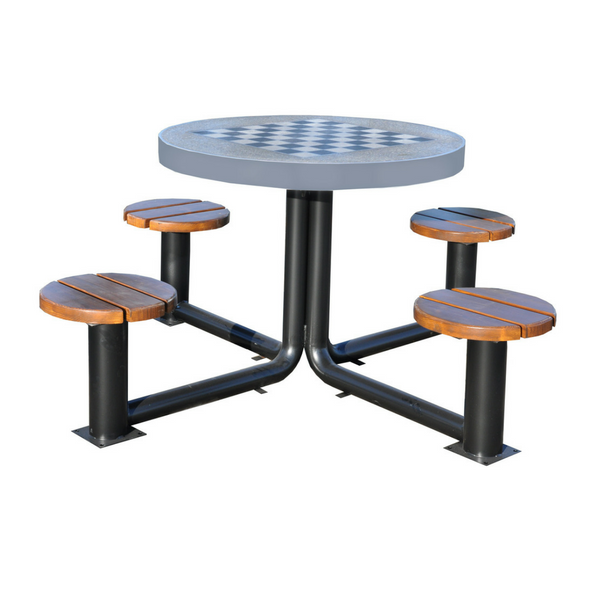
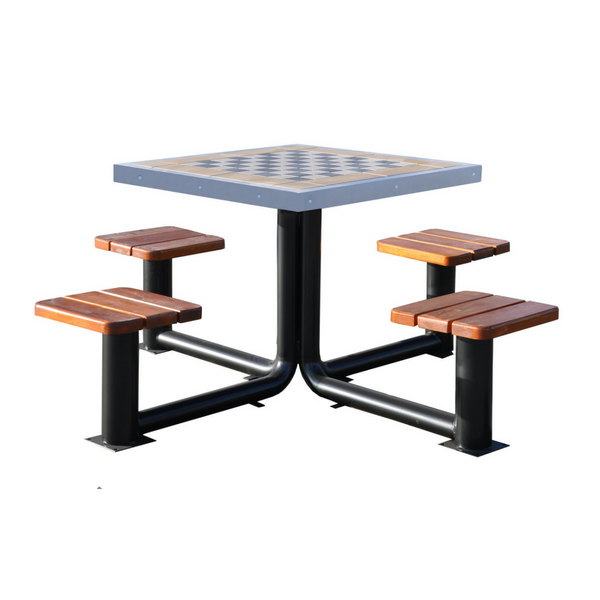
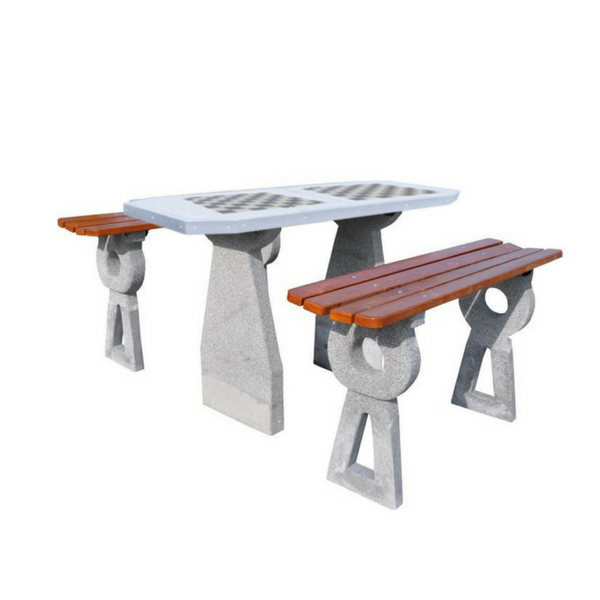
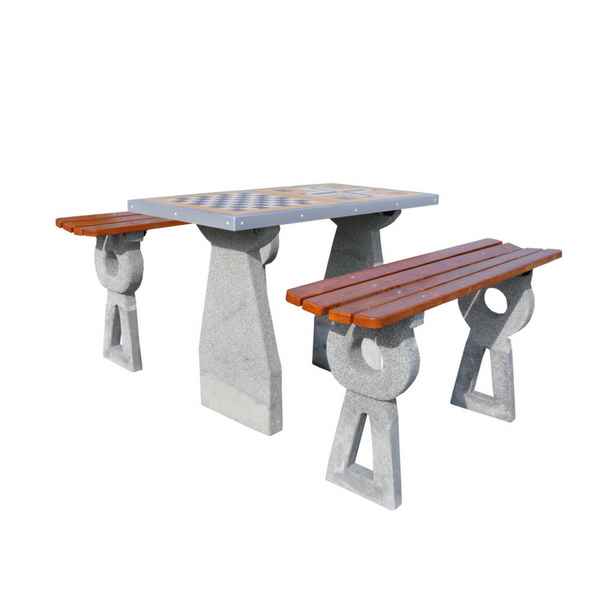
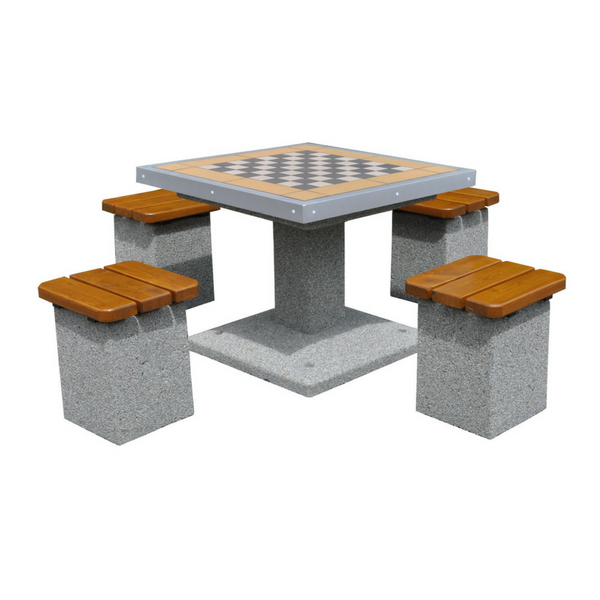
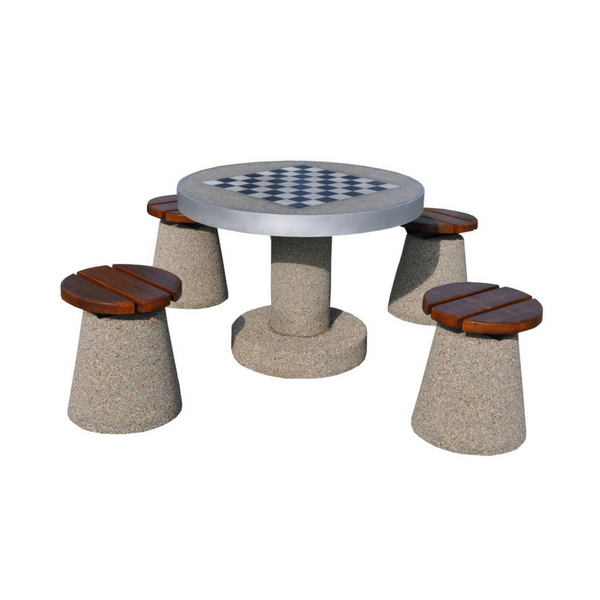
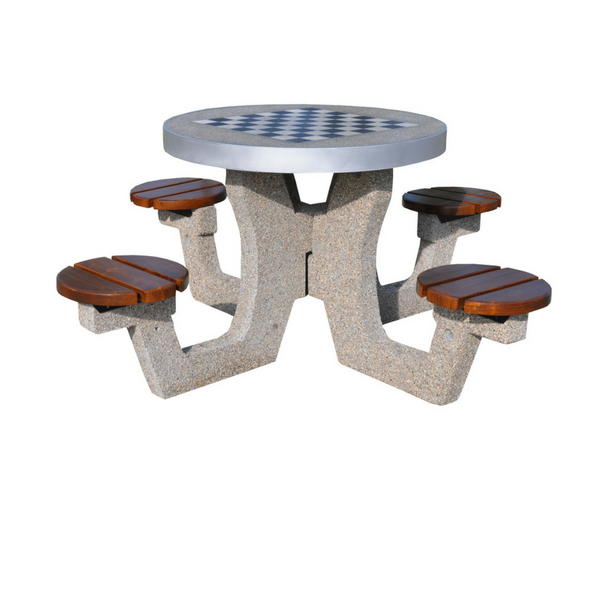
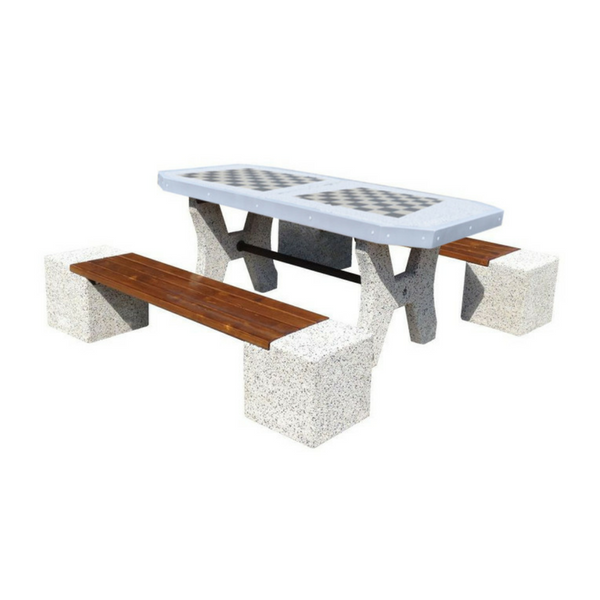
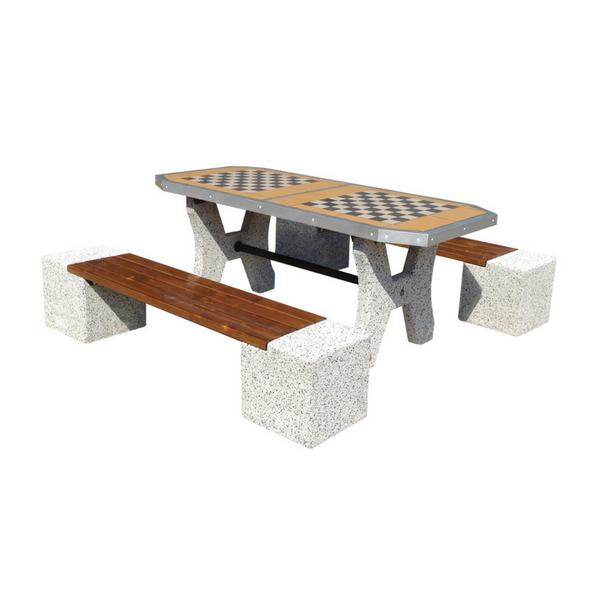
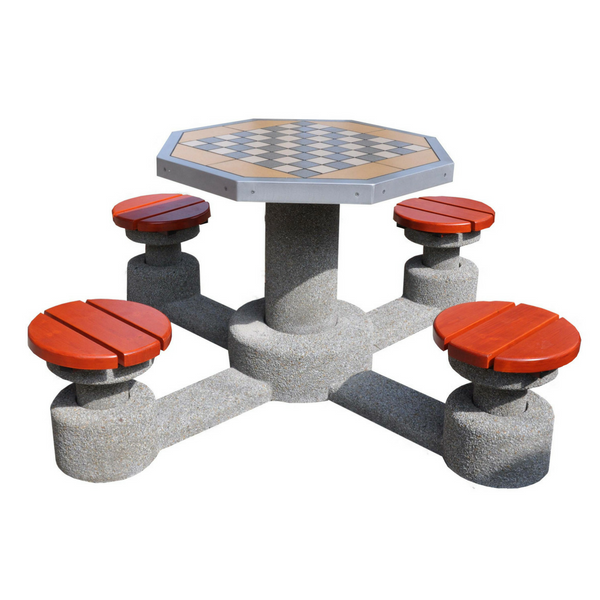
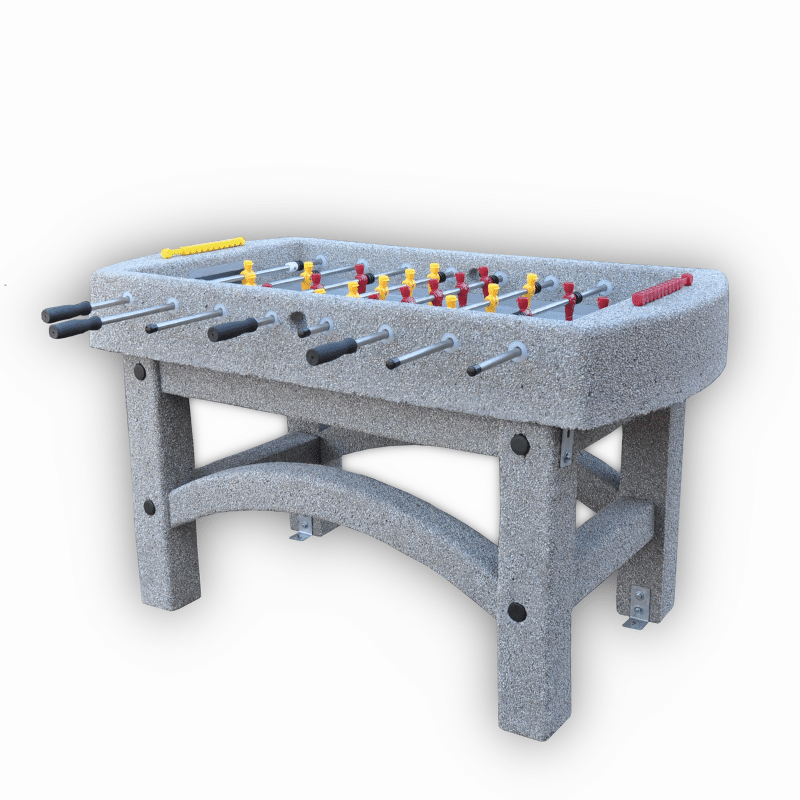
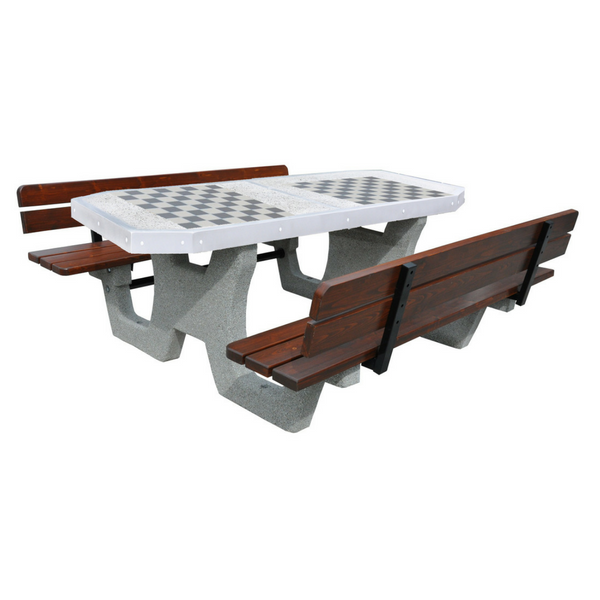
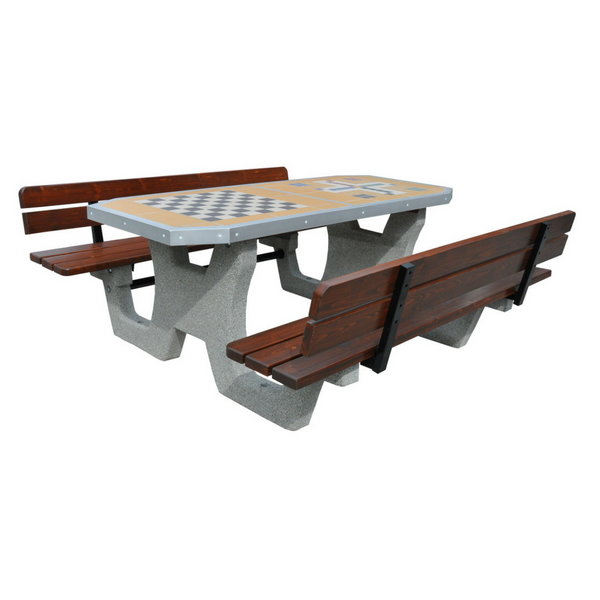
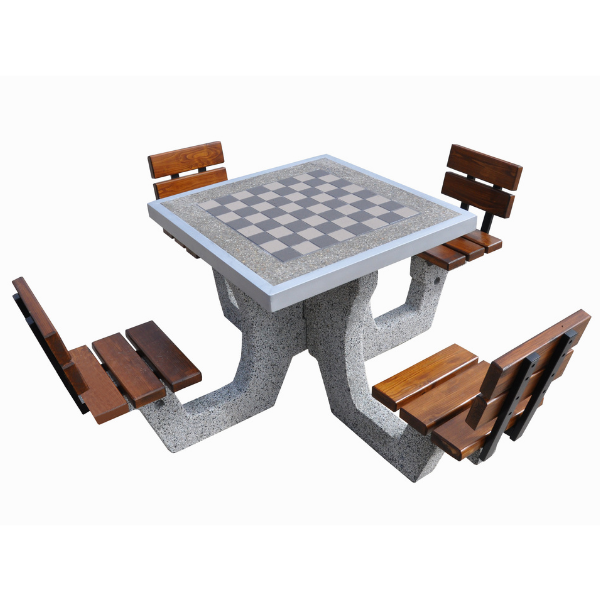
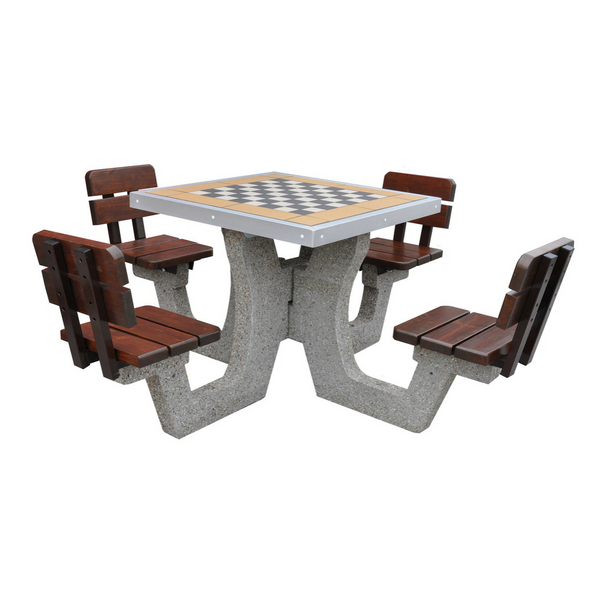
Urban and park tables — concrete and picnic — are functional furnishings for rest and recreation areas, allowing residents to eat meals or meet socially in the open air.
Concrete tables stand out for their durability and vandal resistance, while picnic models are more often chosen for areas with a more intimate, family-oriented character.
Tables are increasingly designed with accessibility in mind — with an extended tabletop that allows a wheelchair or pushchair to be pulled up comfortably. Placed together with benches and litter bins, they create a complete, coherent seating area, often located next to playgrounds and barbecue areas. Tables, most often combined with benches, together form the core of our street furniture range.
The standard tabletop height of an urban table falls within a range that allows comfortable use by both adults and older children, although manufacturers also offer lower variants intended specifically for areas next to playgrounds, where the furniture is used mainly by parents with young children.
Comparing materials, a concrete table wins on durability and vandal resistance but loses on comfort to the touch in extreme temperatures — it heats up considerably in summer and gets cold in winter, which can be unpleasant during prolonged contact. Timber, although it requires regular maintenance with a preservative, remains more pleasant for direct use all year round.
When planning the layout of tables in a public space, it is worth taking into account the prevailing wind direction and exposure to sunlight throughout the day — a table placed in the shade of trees during the hottest part of the day encourages longer use than an identical model left in full sun without any cover.
Models adapted to the needs of wheelchair users, with an extended tabletop and no obstructive support beam underneath, are becoming the standard in new publicly funded projects — the accessibility of urban space is now one of the criteria assessed at the project design stage.
Table maintenance depends mainly on the material — concrete tables essentially require only periodic washing, timber tables are best treated with preservative once a year before winter, and metal components should be checked for corrosion at the joints, where the protective coating is most vulnerable to damage.
Some urban and park table models are additionally fitted with a parasol hole in the centre of the tabletop — a feature that improves comfort in full sun and is a popular choice for locations next to outdoor cafés and food truck areas.


Contact
Need help choosing?
If you are not sure which solution is right for your space, please contact us. We will help you choose products tailored to your needs.