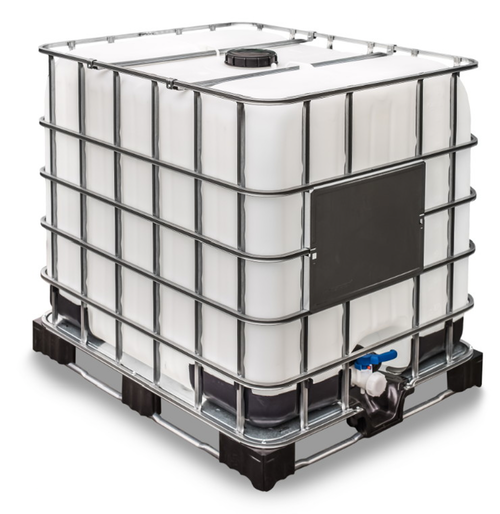
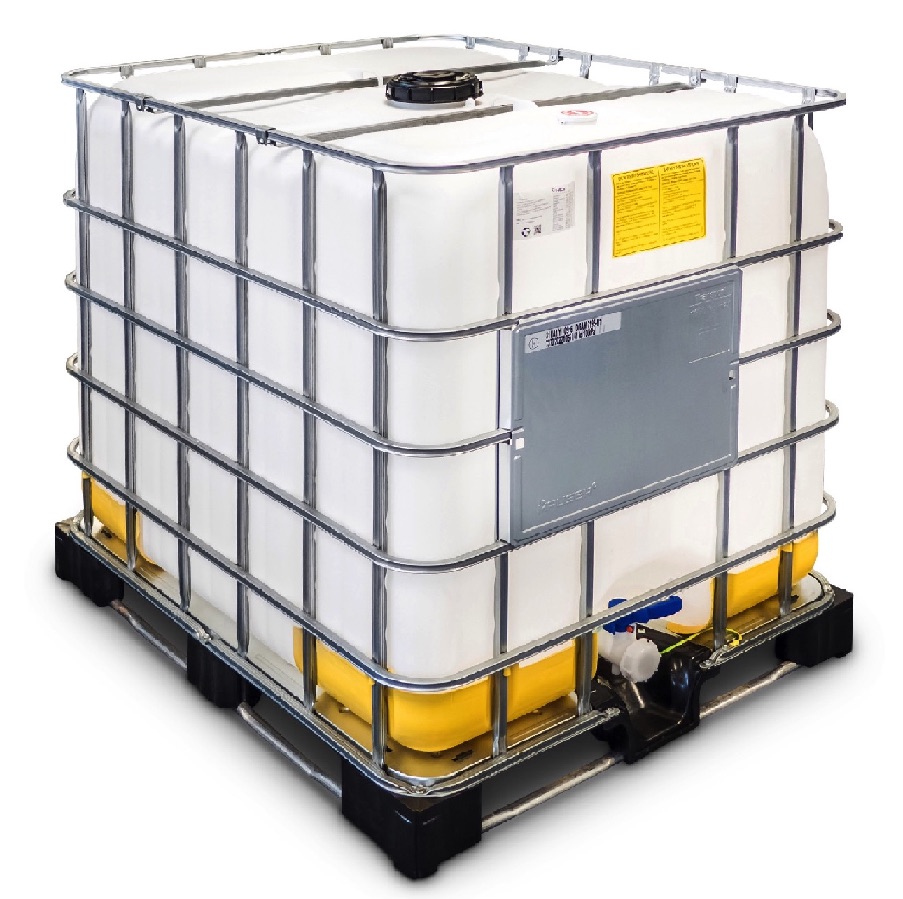
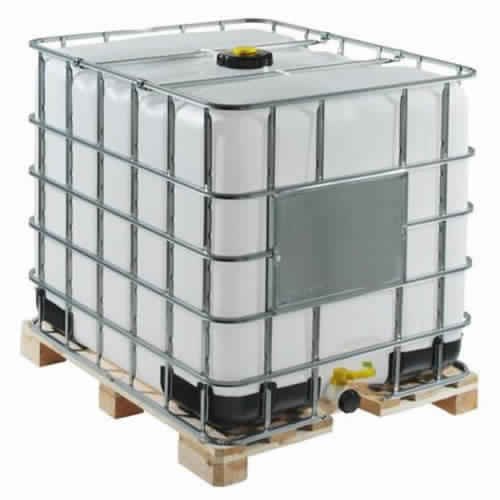
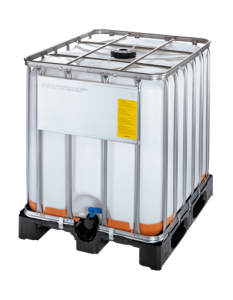
IBC containers (intermediate bulk containers) are large, mobile tanks for liquids, ideal for storing and transporting chemicals and liquid waste. Their design allows them to be moved easily with a pallet truck.
They are widely used in industry and at hazardous waste collection points.
The design is based on a steel frame with a replaceable inner tank, so the pallet can be reused once the container has been emptied and the inner tank replaced. A drain valve at the base allows controlled emptying without tilting the whole container. A typical capacity of around one thousand litres reduces the number of transfers needed when larger volumes of liquid are stored, while the bottom pallet allows the container to be placed directly on warehouse racking or moved with a forklift truck. When choosing a container, check the chemical resistance of the inner tank to the specific substance being stored, as well as the certificates approving the container for the transport of dangerous goods. For a full overview of packaging for hazardous substances, please also browse the other solutions in the hazardous waste containers section, of which IBC containers are one part.
The inner tank, made of high-density polyethylene, is available in several wall thicknesses, selected according to how chemically aggressive the stored liquid is. The more corrosive the substance, the thicker and more resistant the tank material should be, to eliminate the risk of permeation or cracking during transport.
Once the contents have been used, many users choose to replace only the inner tank and keep the steel frame and pallet. This costs significantly less than buying a completely new IBC container and is in line with circular economy principles, which are increasingly promoted in the chemical industry and in waste logistics.
For safe storage, IBC containers must be placed on a spill tray or on a hardened surface with a drainage system for any leaks. Where several units are stored together, adequate spacing must be kept so that each tank can be reached easily during visual inspection of its condition.
IBC containers are usually moved around a site with a forklift or pallet truck. When choosing a model, it is therefore worth checking the load capacity of the bottom pallet and its compatibility with your handling equipment, to avoid damage during day-to-day warehouse operations.
An identification label on the frame, showing the capacity, date of manufacture and permitted use of the inner tank, makes it easier to keep stock records for many units at once. This is especially useful at larger sites, where several dozen IBC containers for different purposes may be in circulation at any one time.


Contact
Need help choosing?
If you are not sure which solution is right for your space, please contact us. We will help you choose products tailored to your needs.